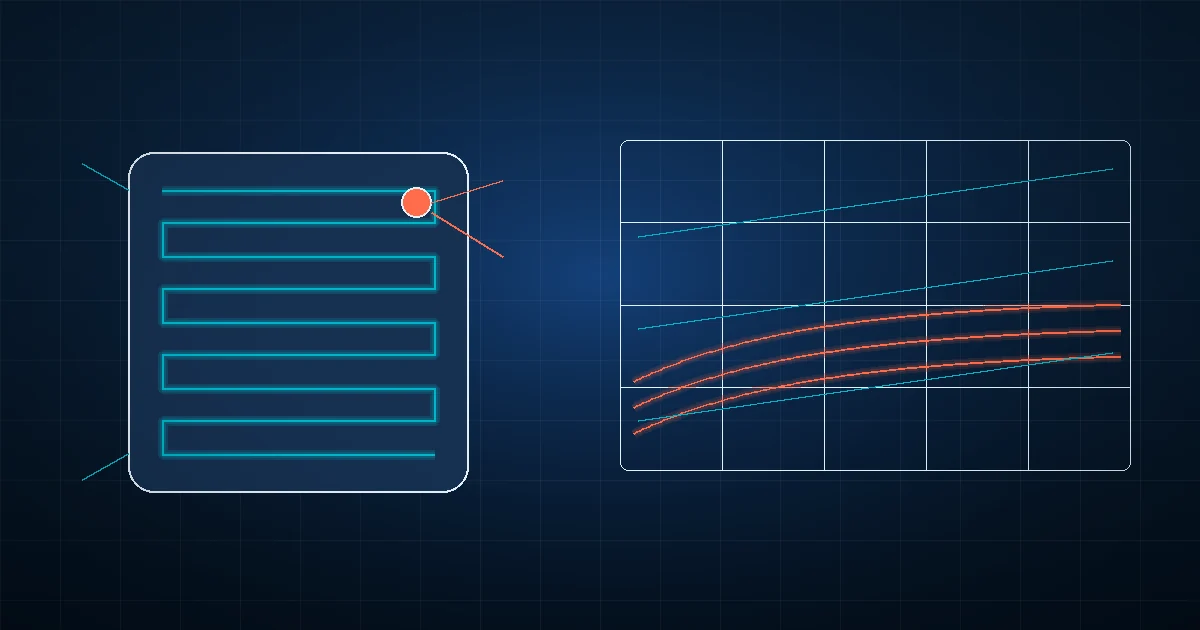
A serpentine copper strain gauge with a thermistor beside it, calibrated across temperatures, turns an 8 × 8 × 0.6 mm patch into a readout that can say whether the finger moved or the room got warmer.
A resistive strain gauge answers with one number, and two things move that number: the strain it was glued to, and the temperature it happens to be sitting at. Everyone knows this, and the standard response is a compensation coefficient — subtract a known drift per degree and move on. That works exactly as long as the whole sensor is at one temperature, which is almost never true on a body, a machine or a roof.
A joint team from five universities in Macao, Hong Kong and Beijing has published a different arrangement in InfoMat: instead of correcting temperature out of the strain signal afterwards, they measure it next to the strain gauge and solve the two together.
One patch, two sensing structures
The base is a copper-on-polyimide film, patterned into a serpentine track. The serpentine matters: the meander unfolds, rotates and bends so that the macroscopic stretch is shared across many short segments, and the metal path never has to survive the full strain in one place. That is the standard way to get a ductile response out of a brittle conductor, and it is why the patch can be bonded to a knuckle at all.
Beside the gauge sits a miniature thermistor. It is not there to compensate the gauge in the classical sense; it is there to supply the second variable. The two signals are read together, and a calibration surface built from multiple temperatures and multiple strain levels maps the pair back to strain. Temperature is then part of the interpretation, not an error term subtracted at the end.
- sensing patch: 8 × 8 mm, 0.6 mm thick
- substrate: 30:1 PDMS; encapsulation: 20:1 PDMS
- strain element: serpentine Cu on polyimide; temperature element: thin-film thermistor in the adjacent area
- readout: wireless, with the output driving a joint-angle command on a virtual manipulator
Why a reference beats a coefficient
A compensation coefficient encodes one assumption — that the temperature of the gauge is known — and folds two effects into one linear factor. A second measurement channel encodes a weaker assumption: that the thermistor and the gauge are close enough to share a temperature. Neither is free, but the second one can absorb non-linearity, because the relationship is fitted over a grid of temperatures and strains rather than reduced to a slope.
The practical consequence shows up in the demonstration: a finger bends, the patch stretches, and the virtual arm follows — without the arm responding to a warm room. The value is not a better gauge. It is a gauge whose output can be defended when someone asks whether the reading came from the object or from the weather.
The honest limits
Eight millimetres on a side is a single point. Scale this to a 64 × 64 array and the question becomes whether each cell needs its own thermistor — doubling the channel count and the wiring — or whether one reference per region is enough. The paper does not settle that, and the answer will depend on how steep the thermal gradient across the measured area is.
The substrate also sets a ceiling that has nothing to do with the sensor: a soft PDMS skin is chosen for conformity, and it softens and creeps as temperature rises, which is a mechanical limit rather than an electrical one. Long-term drift, humidity response and behaviour after repeated bonding are not reported.
What this means for pressure film
A piezoresistive pressure film has the same structure of problem, and the industry usually handles it the same old way — a temperature coefficient in the datasheet, applied by the user. For a large-area array the assumption behind that coefficient is even shakier than for a strain gauge: a 490 × 520 mm sheet on a blade surface in sun and shade is not at one temperature, and a single coefficient applied to the whole map will bend the result into a shape the load never had.
Two things follow. A separate temperature channel, or a sparse grid of them, is worth more than a tighter coefficient, because it can be applied locally. And the calibration table has to be two-dimensional — pressure and temperature — with the temperature axis measured on the same hardware, otherwise the correction is being applied to a number that was never characterised at that condition.
Source: InfoMat, “Temperature–Strain Decoupled Electronic Skin for Human–Machine Interaction”, summarised by the China Electronic Components Association, 2026. Device figures as stated by the authors.
我们做柔性压阻薄膜与 4096 点压力分布测量系统,正是为这类接触界面。