Clamping pressure across a blade scarf repair: the toe does the damage
A scarf repair is bonded under vacuum bag or clamps, and the work instruction names one pressure. What the patch experiences is a distribution — and the toe of the scarf is where it matters.
PDRELTEST engineering · 2 min read · 2026-10-26
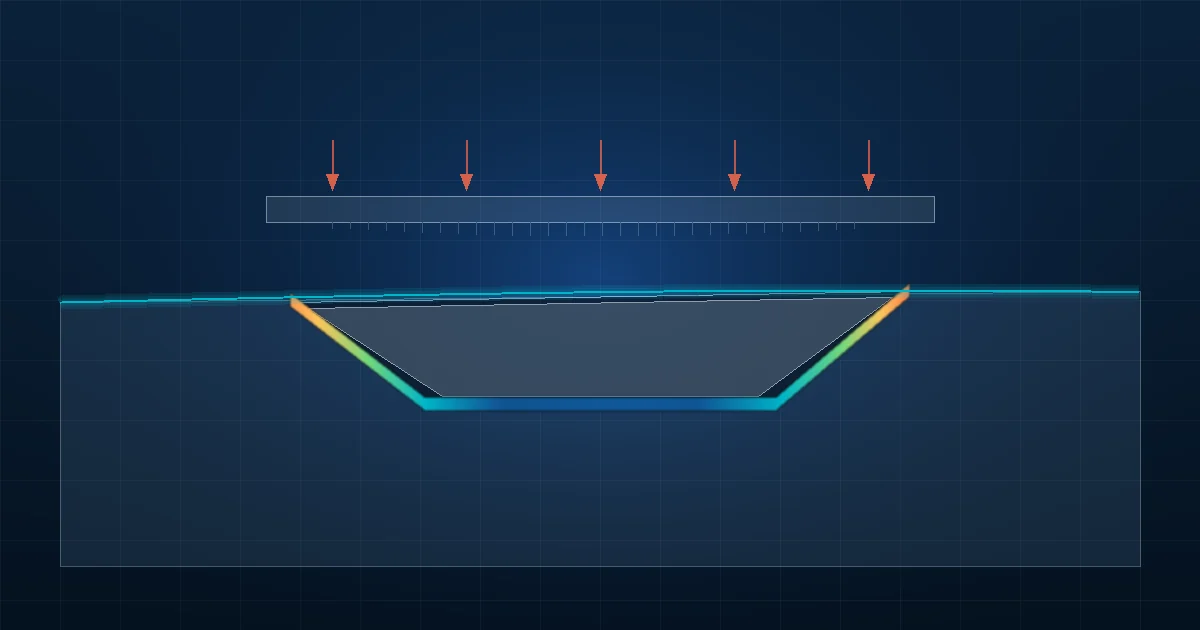
A scarf repair on a blade is bonded under vacuum bag or under clamps, and the work instruction usually names a single pressure. What the patch actually experiences is a distribution, and the part of that distribution which decides the bond is the toe of the scarf.
Why the toe is the problem
The toe is a step in stiffness where the repair meets the original laminate. A vacuum bag bridges across it, so pressure there falls below nominal while the bag pulls tight elsewhere. A mechanical clamp does the opposite and concentrates load on the edge of the pad. Either way the adhesive thickness departs from design at the one location where peel and shear are already highest.
What uneven pressure leaves behind
Too thick an adhesive layer reduces shear strength and cures unevenly; too thin starves the joint. Neither is visible after cure. Both are found later — on first load, or in fatigue — and by then the repair is the suspect rather than the clamp. The mechanism is the same one that makes a bond line fail months after it passed inspection.
How to check it
Put a sensing film over the patch, read once before vacuum is drawn and once at full vacuum, and record the ratio between toe and centre. Write that ratio into the work instruction as an acceptance criterion. A 0.3 mm layer changes the local pressure it is measuring, so use it to compare repairs, not to reproduce the process exactly.