A work instruction says 120 N·m. The joint experiences a pressure in megapascals under the washer. Between torque and pressure sit two conversions, and each one rests on an assumption the operator cannot see.
Torque to clamp force
T = K · F · d. The nut factor K folds thread friction, under-head friction and lubrication into a single number, and it is the weakest link in the chain: the same torque applied to a dry thread and to a lubricated one can produce clamp forces that differ by a factor of about two. Torque is a proxy for force, not a measurement of it.
Force to pressure
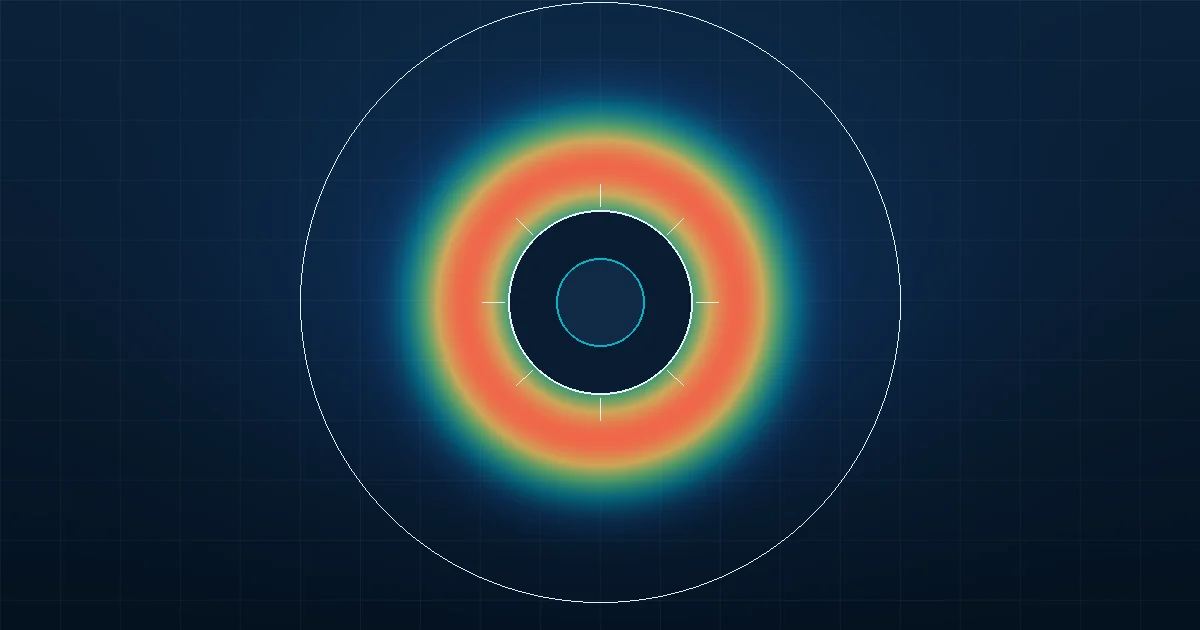
Divide by contact area — but the area that matters is the annulus actually touching, not the face of the washer, and pressure inside that annulus is not uniform. It peaks just outside the hole and decays toward the outer edge, so an average conceals exactly the gradient that drives fretting and fatigue at the hole.
What a sensing film can and cannot do
A film does not certify the pressure under a high-preload steel bolt. Those joints run at several hundred MPa, far above the 400–6000 kPa range of a standard build. What it can show is whether the contact ring is closed, whether the joint is gapping on one side, and whether load arrives where the analysis assumed — a manufacturing and assembly check, and the question most bolted joints actually fail on.
What to do instead of converting
If force is the acceptance criterion, measure force: torque plus turn, bolt elongation, or a load washer. If distribution is the criterion, map it. Converting torque to pressure with a table is the step where the two get confused, and it is usually the step that is written into the work instruction.
The parts this article is about
Related technical articles
Pressure indicating film vs pressure mapping: what each method can and cannot tell you
Indicating film gives you one peak-pressure map per assembly on a single-use sheet; a sensor arr
Choosing a flexible sensing film: range, array density and encapsulation
Three parameters constrain each other. Range headroom, array density and encapsulation are usual
On a curved blade surface, a flat sensing film reads low at the edges
A flat sheet cannot follow blade curvature. It contacts at the crown, bridges at the edges, and