Robot skin and blade mapping: same film, opposite requirements
China's e-skin orders surged through 2026, and most of that hardware is piezoresistive film. The same material is being pushed in two opposite directions — and only one of them has to survive a comparison two years later.
PDRELTEST engineering · 4 min read · 2026-10-28
Through 2026 the Chinese humanoid robot supply chain moved from demonstration to small batch, and the tactile layer moved with it. CCTV Finance reported in September that one textile supplier in Jiangsu took 13,000 bionic outer skins in a single month, and that a sensor company had delivered more than 40,000 robot skins, most of them within the previous six months. A film sensor maker in Suzhou reported orders for over a thousand sets of fingertip e-skin. In August, China News Service reported a bio-based e-skin from a university team at roughly RMB 1,000 for a hand-sized unit.
Most of that hardware is piezoresistive film — the same class of material as the sensing layer on a wind blade test. It is worth being precise about how far the similarity goes, because the two applications pull one technology in opposite directions.
Four axes where they diverge
Range. A robot finger gripping an egg works in the tens of kilopascals; a handshake, a little more. An interface between a steel saddle and a laminate runs from hundreds of kilopascals to several megapascals. Our standard film starts at 400 kPa and stops at 6 MPa. The two operating windows barely touch, and a formulation tuned for one is not tuned for the other.
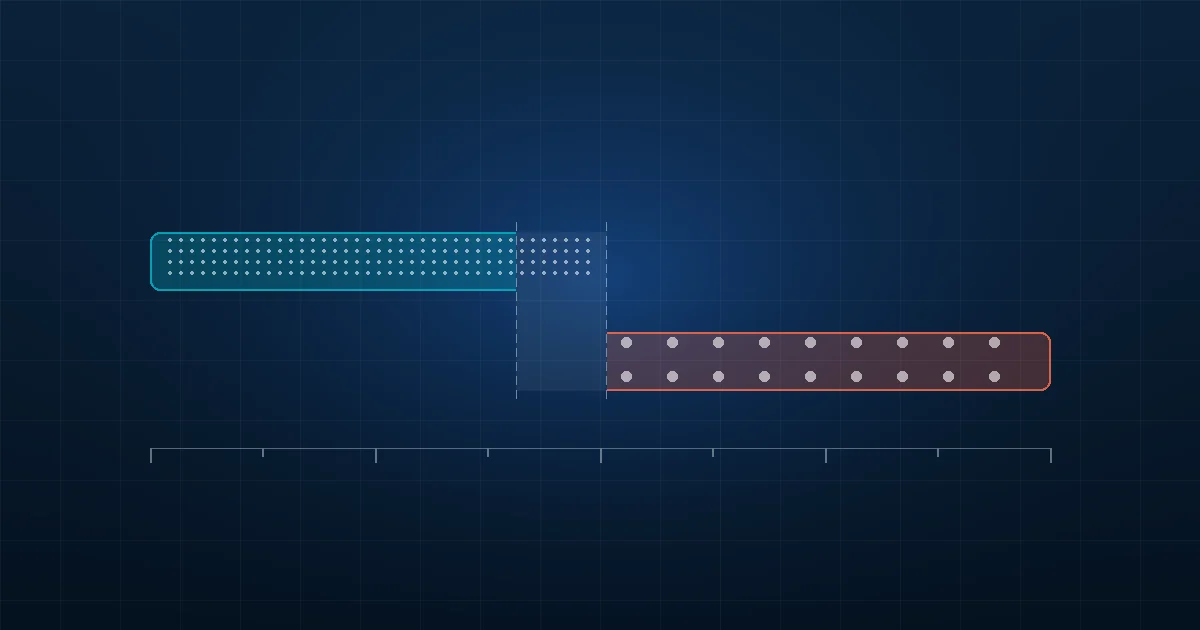
Density versus coverage. E-skin wants many points per square centimetre over the area of a hand, because the question is where the contact is and how hard. Industrial mapping wants 4,096 points spread over a quarter of a square metre at a 7.6 mm pitch, because the question is the shape of a pressure field across a whole surface. Dense and small, or sparse and large: both are called "high resolution" in a datasheet, and they mean different things.
What accuracy is for. E-skin resolves intent — enough grip to lift, not enough to crush. It is a control signal, and the loop closes in milliseconds, so a ten per cent error is corrected before anyone notices. Industrial measurement produces a number that will be compared with another number from another campaign, possibly years later. A ten per cent error there does not get corrected; it becomes a conclusion.
Lifecycle. A skin is replaced with the robot generation. A measurement film has to stay comparable across batches for the life of a test programme, which is why it carries a calibration record per sheet rather than a datasheet value.
One technical fork worth knowing
Piezoresistive film comes in two electrical flavours. In contact-resistance types most of the resistance sits at the interface between two layers, so the signal is dominated by how much area is touching; the bulk resistance of the coating matters less, and temperature drift is comparatively small. In bulk-resistance types current flows through the loaded particle network, which gives better linearity and a wider range but more sensitivity to temperature and creep. Robot skin tends toward the first, because it is cheap, flexible and forgiving. Industrial measurement tends toward the second and pays for it with temperature control and calibration. Neither is the better technology. They are optimised for different failure modes.
What the boom actually gives the industrial side
Cheaper conductive paste. Roll-to-roll printing that holds tighter tolerances than it did three years ago. Better encapsulation. A supply chain that can deliver tens of thousands of units, which means the process is under control in a way laboratory production never is. All of that lowers cost and improves consistency for industrial film as well. None of it raises the range ceiling or the accuracy, because those are set by the sensing-layer formulation and by the calibration chain, not by volume.
The question that separates them
Not which is more advanced: if the reading is wrong, will anyone find out before the part fails? A robot finger usually will — the object slips, the grasp fails, the control loop corrects within a cycle. A blade usually will not. The load is applied once, the map looks plausible, and the error surfaces at first load or in fatigue months later, when the repair is the suspect and the measurement is not.
That is why the industrial side of this technology is boring on purpose: a known principle, a calibration record, a temperature log, and a number someone else can check. The e-skin boom does not change that requirement. It only makes the film cheaper to produce.
The parts this article is about
Related technical articles
The same load, a different number: temperature drift in pressure mapping
Zero and span both move with temperature, and a blade on an outdoor stand moves through a wide b
On a curved blade surface, a flat sensing film reads low at the edges
A flat sheet cannot follow blade curvature. It contacts at the crown, bridges at the edges, and
Does a 0.3 mm sensing film change the interface it measures?
Inserting a sensing film into a clamped joint adds thickness and stiffness to the load path. The